Meet Lawrence Hartmann, MD
A Leader in Psychiatric Change

In a previous post, I wrote about the dramatic, performative contribution of John Fryer, MD in removing the diagnosis of homosexuality from the American Psychiatric Association’s (APA) Diagnostic and Statistical Manual (DSM).
The visual of Dr. Fryer—having to wear a disguise as Dr. H Anonymous at a time when an openly gay psychiatrist would lose his job and practice and perhaps even his license—has long captured the imagination of followers of those historic events.
Yet, compelling as the narrative of a single dramatic event leading to positive change may be, changing an entire profession’s minds, attitudes and practices is a much more complicated process. Some of this complexity is touched upon in a recent award-winning documentary called CURED. An important interviewee in that documentary is Lawrence (Larry) Hartmann, MD.
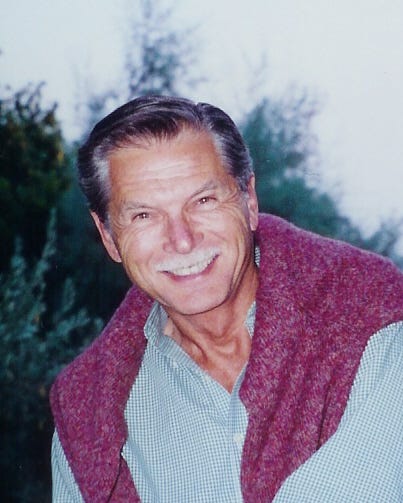
Dr. Hartmann recently published a talk he gave in 2024 to the New York Psychoanalytic Society and Institute in which he reflected upon the 50th anniversary of the 1973 APA decision. He introduced himself in the following way:
“I grew up in Manhattan in the 1940s. Both my parents were psychoanalysts and members of the New York Psychoanalytic Society and Institute. I became a psychoanalytic psychiatrist, was analyzed, and saw adult, adolescent, and child patients, mostly in Cambridge, Mass., for about 50 years; and starting in the 1960s, I taught at a respected medical school for about 50 years. I also developed a fairly busy public psychiatric career.”
“Well after 1973, I got myself elected to the APA Assembly (for Massachusetts), then Speaker of the Assembly, Trustee, Vice President, and then President of APA, serving in 1991–92, after which I remained an active Past President for several years. Additionally, over several decades I became a member and a few times chair of several APA Councils and Committees, and I helped found the American Psychiatric Press, and the American Psychiatric Foundation. I also worked in several non- APA psychiatric organizations such as the American Academy of Child and Adolescent Psychiatry and the American Association for Social Psychiatry.”
Among his many other professional accomplishments, Dr. Hartmann, especially in the 1980s and 1990s, actively worked on and helped bring about changes in areas and issues related to international psychiatry and mental health and human rights. His activities included traveling:
· to China as co-leader of a pioneering scientific meeting.
· to Saudi Arabia as a consultant in mental health.
· to South Africa, with a small group sponsored by the Institute of Medicine, the American Association for the Advancement of Science, APA and the American Public Health Association, to study, document, and prepare for changes in post-apartheid health and mental health.
· to Chile during Pinochet’s dictatorship as part of a Physicians for Human Rights-APA group to study and document human rights and mental health abuses there.
· to the Soviet Union to help document and to end Soviet psychiatric hospitalization of political dissidents.
Also, after the iron curtain fell, and medical and psychiatric organizations in several Eastern European countries were able to ask for long-neglected educational help in psychiatry and mental health, Dr. Hartmann helped create, and then led, a three-week-long APA traveling department of psychiatry, staffed by leading American researchers and teachers, which (with remarkably non-interfering drug company financial support) went to Poland, Czechoslovakia, and Hungary for several weeks of lectures, seminars, talking, teaching and learning .
As I read his recent account of the events leading to the change in the diagnostic status of homosexuality in 1973, it brought to mind an interview I did with Dr. Hartmann that was published in 2006 during my tenure as Editor of the Journal of Gay and Lesbian Psychotherapy (now the Journal of Gay and Lesbian Mental Health).
There Dr. Hartmann explained how complex a process and how much work on the part of many people was involved in creating diagnostic change. What follows are some of his insights from that interview about APA’s 1973 decision.
***
“There were several things that I did, and I am very pleased to have been part of that 1973 decision. Many people were involved. It was not just science and not just politics. It was not just the APA Board. It was not just [Robert] Spitzer, or one APA committee; it was not just one or two or three outside groups. There was a climate of change and there were a lot of people who came together and did a lot of cooperative work, sometimes without talking to each other, sometimes aware of one another, sometimes not.
“Though already a member, I felt an angry outsider in the APA in May 1970. It appalled me, and others, that the organization’s leaders would not comment on, or even listen to its members about, Cambodia and Kent State. I decided to look at what the APA was, and what my local Psychiatric Society was, and what I could do to inject social issues and values into the organizations’ concerns.
“I joined the NNEPS [Northern New England Psychiatric Society] Social Issues Committee, and I also began, with some others, to found and run a national group called the Committee for Concerned Psychiatrists (CFCP). This very quickly, in the early 1970s, nominated and got elected some very liberal and social-psychiatrically thoughtful people into the [national] APA leadership—which was absolutely key to 1973.
CFCP helped create a climate of real change in organized psychiatry, building partly on anti-Vietnam War energy, and partly on the major recent civil rights advances for Blacks, as well as work for women’s and children’s issues.
“In 1970 to 1973, specific gay issues percolated upward in and around the APA from several places. There were some demonstrations at APA meetings. There were closeted but useful GayPA cocktail parties at APA meetings [JD: During those years, closeted gay members of the APA would meet during annual meetings at local gay bars and referred to themselves as the Gay-P-A or GayPA].
“There was a breakup of one scientific session where a behavioral therapist was promulgating coercive/aversive behavior therapy—then quite common—aimed at trying to stop gay people from being gay. There also was effective drama, as when the late John Fryer [in 1972] showed up in a mask to conceal his identity on an APA panel, where he spoke movingly as an anonymous gay psychiatrist.
“There was a panel on gayness at the [May 1973] Hawaii APA meeting, where I think [Judd] Marmor and [Robert] Stoller spoke well, and also a smart non-psychiatrist writer, Ron Gold, whose talk, urging the end of calling gayness an illness, was memorably titled “Stop It! You’re Making Me Sick!”
“One thing I did was help create an activist APA climate in Washington, and I had the luck to help put in some specific people as leaders in the APA who were then very receptive and eager to do pro-gay things in 1973. Vietnam War, women’s and Black issues, and then gay issues, helped fuel the idea that psychiatry had to be more creative about acknowledging and taking part in social issues that affected mental health and mental illness.
“We shifted the center of gravity away from a very conservative APA to far more progressive leadership, with new officers and a new Medical Director, whom we helped choose. (Even at our young age, the CFCP was consulted about and helped choose a liberal, decent, and creative Medical Director, Mel Sabshin). There were also structural things with By-Laws, the Board of Trustees, the Assembly, nominations, and choices in the APA that we liberalized very quickly. It was a very exciting time and the APA shifted significantly.
“I studied the structure and Constitution and By-Laws of the APA—nearly no one had ever done that—and repeatedly wrote constitutional amendments; the CFCP proposed them by petition, and the APA membership passed them.
“The Board of Trustees had been a rather closed and self-perpetuating circle of 63-year-old white males, who wielded most APA power. I noticed that the APA was usually sluggish in taking any bold positions, partly because the Board felt social issues were not adequately psychiatric and partly because of the APA Assembly, which tended to over-represent the small and conservative states. (Wyoming, which had 14 APA members, had the same APA Assembly representation as Manhattan, which had about 1700 members).
“While doing work nationally, I also began locally. I joined and soon became chair of the Social Issues Committee of the Northern New England Psychiatric Society (NNEPS). I was perceived as having reasonable values and lots of ideas, and the NNEPS was delighted that for a change somebody was trying to inject ideas into the APA. There had been, in most of Massachusetts academic psychiatry, a fairly widespread disdain for (and ignorance about) the APA. However, a good many Bostonians and other New Englanders respected me, read some of what I wrote, listened, and decided that if I was doing it, it was probably OK.
“After some success with several other social issues, I asked Richard Pillard, who was in Boston and had recently become the only really openly gay psychiatrist that I knew, whether he and I could craft a several-point position paper, revising the psychiatric status of gayness, arguing that gayness was not an illness, and that gay people deserved full civil liberties.
“We thought, and think, that gayness does not meet decent criteria for a diagnosis or a mental illness. We produced a good draft and got the NNEPS Social Issues committee to discuss what a diagnosis is, and then to pass our draft. We then got the NNEPS Council to pass it, minus one or two small details, and send it on to the [APA] Assembly.
We eventually got the Assembly to discuss, think about the issues, identify with the cause a bit, and –somewhat to my surprise—to pass it. That grass-roots effort then joined the (simultaneous and more documented) parallel movement from the Committee on Nomenclature, the Council on Research, and the Reference Committee.
“To have the Assembly educated and allied and even somewhat enthusiastic for this essentially scientific removal of homosexuality from the list of psychiatric diagnoses –that was politically timely, fortunate, and important for getting anything done. Even science is sometimes given opportunities by politics and timing. The wording that the APA finally used was our NNEPS wording, rather than the very similar wording from the Council on Research. I was one of several colleagues who worked on this.
“Several friends have generously suggested that my contributions included being right; writing (with Richard Pillard) a good draft; arguing and persuading well; sensing that the scientific and political climate was becoming right; helping analyze the steps needed and making the climate be right; helping to have several simultaneous psychiatric groups scientifically discuss, and then decide to change, the psychiatric status of homosexuality.
“. . . the APA after 1973 frequently came forward to comment on gay issues from a now supportive point of view. That was far easier once the ’73 decision happened, and the APA was no longer trapped behind a pathologizing idea. It was also easier because an open and constructive gay presence was growing within the APA.
“I would also say—something that we did not anticipate in ’73—that the amount of good and thoughtful and many-sided literature on homosexuality—psychiatric and non-psychiatric – published since 1973 has probably considerably exceeded the total amount of good and thoughtful literature on homosexuality written in the several thousand years before 1973.”
When I asked Dr. Hartmann if he had any final thoughts during that interview, he responded:
“I had very good fortune in growing up in a supportive and loving and friendly and highly educated family, and in having lots of good chances in life. I have also had the good fortune of growing up with an active social conscience. I wanted to work on a lot of scientific and artistic and social and political issues, and that came significantly to include gay issues, as gayness felt more and more authentic to me in my late teens and twenties and thirties.
“I am glad I have been able to do some useful work. I am very glad that I was able, even as a young psychiatrist, to contribute in some ways that used who I am reasonably well from several points of view—to help contribute to the 1973 change, and then to get myself into a position where I could help to organize psychiatry to be supportive and creative in helping develop further changes over the next thirty-plus years. That is something I am pleased about.
“Psychiatrists should respect and enjoy diversity and be careful not to impose societal disapprovals as if they were diagnostic labels.”
To which I will only add that I heartily agree with Dr. Hartmann’s words of wisdom.
References
Bayer, R. (1981). Homosexuality and American Psychiatry: The Politics of Diagnosis. New York: Basic Books.
Drescher, J. (2003). An interview with Robert L. Spitzer, MD. J. Gay & Lesbian Psychotherapy, 7(3):97-111.
Drescher, J. (2006). An interview with Lawrence Hartmann, MD. J. Gay and Lesbian Psychotherapy, 10(1):123-137.
Drescher, J. & Merlino, J.P., eds. (2007). American Psychiatry and Homosexuality: An Oral History. New York: Routledge.
Hartmann, L. (1992). “Some social psychiatric problems in Chile, South Africa and the Soviet Union,” in Masserman, J. ed: Psychiatry and World Accords New York: Gardner.
Hartmann, L. (1992). “Reflections on humane values and bio-psychosocial integration,” American J Psychiatry, 149 (9):1135-1144.
Hartmann, L. (2025). De-Pathologizing homosexuality: 50th anniversary notes on December 1973. Psychoanalytic Inquiry, 45(6):505-511.
Hartmann, L. (1996). Foreword to Cabaj, R. and Stein, T., eds.: Homosexuality and Mental Health: A Comprehensive Textbook. Washington, DC: APPI.
Lynch, P.E. (2003). An interview with Richard C. Pillard, MD. J. Gay & Lesbian Psychotherapy, 7(4):63-70.
Nightingale, E., Hartmann, L., Hannibal, K., Geiger, J., Lawrence, R. & Spurlock, J. (1990). “Apartheid medicine: Health and human rights in South Africa,” JAMA, vol. 264(16): 2097-2102.
Rosario, V.A. (2003). An interview with Judd Marmor, MD. J. Gay & Lesbian Psychotherapy, 7(4):23-34.
Scasta, D.L. (2002). John E. Fryer, MD, and the Dr. H. Anonymous episode. J. Gay & Lesbian Psychotherapy, 6(4):73-84.
Stoller, R.J., Marmor, J., Bieber, I., Gold, R., Socarides, C.W., Green, R. & Spitzer, R.L. (1973). A symposium: Should homosexuality be in the APA nomenclature? American J. Psychiatry, 130(11):1207-1216.